
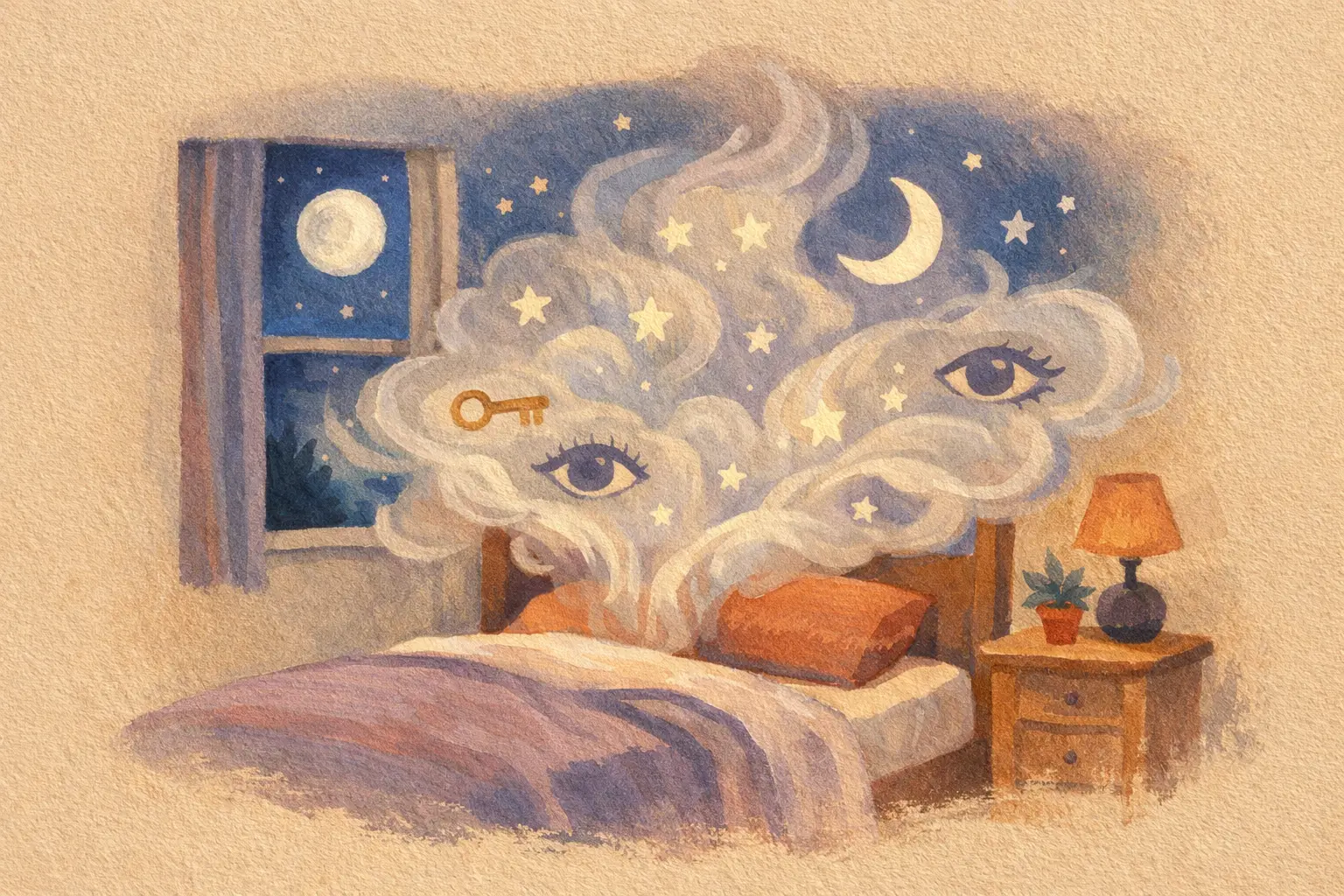
What Triggers Dreams During the Night?
When you fall asleep, your brain doesn’t stop working. It cycles through several stages, including REM sleep. During this phase, your brain activity is almost as intense as when you’re awake, while your body remains completely relaxed.
At night, it’s during REM sleep that your dreams are the most vivid and colorful. Sometimes, you also dream during light sleep, but those dreams are usually less memorable. The night is, therefore, a fertile ground for striking dream imagery.
Nighttime dreams arise from your brain’s spontaneous activity. It sorts, organizes, and replays memories, emotions, or impressions gathered throughout your day. For example, if you experienced frustration or great joy, your mind might use that as inspiration for an unexpected dream scenario.
You may notice that certain elements come back regularly: familiar places, known faces, or even improbable situations. This repetition often means your unconscious is trying to draw your attention to a specific issue.
Why Do We Dream at Night: Between Science and Interpretation
Wondering why we dream at night also means exploring the two main approaches to the mystery of dreams. On the scientific side, researchers suggest that dreams help process memories, learning, and emotions. They act as a selective filter, allowing your brain to tidy up and reinforce important elements.
For example, after a day of exams or a significant event, you might dream of similar situations, as if your mind is replaying the scene to better digest it. This theory explains why some dreams feel so close to reality.
But there’s also a symbolic and personal dimension. Many schools of thought, such as psychoanalysis and dream interpretation, believe dreams reveal hidden messages. A dream about a snake can symbolize inner transformation or a buried fear, depending on your feelings and experiences.
If you want to decode your dreams’ meanings, a tool like the dream dictionary can help you explore their symbolism. Feel free to compare your dreams with those of others, but remember that each interpretation is unique, as it depends on your personal story.
The Role of the Unconscious in Nighttime Dreams
The unconscious is often at the heart of the question: why do we dream at night? It’s a vast reservoir where memories, unspoken desires, fears, and hopes accumulate. At night, when your conscious mind lets go, this space opens up and allows what’s hidden during the day to emerge.
A dream can be a mirror of your inner state. For example, dreaming of a spider might reflect feeling trapped in a situation or fearing an invisible threat. The images produced by the unconscious aren’t random: they often express deep needs or worries.
Some dreams, like those about death or falling, can be intense, but they’re not necessarily negative. They may represent change, awareness, or the end of a cycle in your life. The key is to analyze how you feel upon waking and to consider the connections to your real life.
By taking the time to reflect on where these images come from, you gradually learn to communicate with your unconscious. This gives you a unique opportunity to get to know yourself better.

Major Dream Themes and Their Meanings
Certain dream themes have always been common to most people. Why do we dream at night of water, teeth falling out, or babies? These universal motifs are often linked to important life stages or deep emotions.
Dreaming of water, for example, can reflect your emotional state. A stormy sea might indicate a stressful period, while clear water often symbolizes inner peace. Dreams of teeth falling out are frequently associated with fear of losing control or a major life transition.
Animals also play a special role. Dreaming of a cat or a dog can represent a need for protection, independence, or loyalty. Dreams about pregnancy or an ex often relate to new projects or unresolved past stories.
To better understand these symbols, you can turn to astrology, which links certain universal archetypes to your personality. Feel free to explore each theme on our site to dive deeper into their many facets.
Practical Tip: How to Remember and Interpret Your Dreams
To benefit from nighttime dreams, you first need to remember them. Right after waking up, jot down every detail in a dream journal. Even a single word or fleeting image can be the starting point for interpretation.
If you have trouble remembering your dreams, adopt a bedtime ritual: relax, set the intention to remember your dreams, and avoid screens before sleeping. Discover more tips in our guide How to Remember Your Dreams.
Once your dream is written down, reread it with a clear mind. Ask yourself what each element means to you. For example, dreaming of fire can symbolize intense passion or repressed anger. Find the meaning of this symbol on the page dedicated to dreaming of fire.
Don’t hesitate to compare your dreams over several days: you might notice recurring patterns. These repetitions are keys to understanding your current concerns. Also, take the time to connect your dreams to what’s happening in your life.
Finally, keep in mind that interpretation isn’t an exact science. What matters is the personal resonance of each dream and how you feel when you reread it.
When Dreams Become Tools for Reflection
Nighttime dreams invite you to explore your thoughts in a different way. They can give you a new perspective on a problem, an emotion, or a decision you need to make. Sometimes, a dream acts as a mirror, showing you a side of yourself you hadn’t noticed.
If you want to make progress on a specific question, you can complement dream analysis with a tarot reading. Tarot cards, like dreams, offer symbolic images. Their interplay can open up new avenues for reflection.
You can also use numerology to better understand the cycles in your life. Check out our guide Numerology: How to Calculate and Interpret Your Key Numbers to enrich your exploration.
Ultimately, nighttime dreams don’t predict the future, but they support you on your personal journey. Their power lies in their ability to awaken your intuition and creativity.
When Should You See a Professional?
Sometimes, nighttime dreams can become a source of distress or deep questioning. If you often wake up anxious, or if certain dreams disturb your sleep to the point of affecting your days, it may be helpful to talk to a professional.
A psychologist or therapist can help you put words to your feelings and get through a difficult period. Sometimes, buried memories resurface through dreams, requiring support to be understood.
If you’re simply curious about exploring your intuitive potential, you might be interested in fields like mediumship. Our guide How to Know If You’re a Medium offers ways to develop this sensitivity, but never replaces professional help if needed.
Remember: dreams are messengers, not judges. Seeking support can be a chance to understand yourself more deeply.
Frequently asked questions
Does everyone dream at night?
Yes, everyone dreams every night, even if some people never remember them. Dreams are an integral part of the sleep cycle. Sometimes, a person may recall several dreams per night, other times none at all. This depends on many personal factors and the moment of waking.
Why don’t we always remember our dreams?
Dream recall mainly depends on the sleep stage when you wake up. If you wake up suddenly from deep sleep, you might forget everything. Writing down a dream as soon as you wake up helps anchor it in your memory. With practice and certain rituals, you can improve dream recall.
Can you influence the content of your dreams at night?
It’s possible to steer some dream themes by thinking about a specific topic before sleeping. This is called lucid dreaming. Techniques like visualization help guide your imagination. However, the content often remains unpredictable because it also depends on the unconscious.
Do all nighttime dreams have a hidden meaning?
Not all dreams necessarily hide a big message. Some simply reflect daily life or passing concerns. Others reveal deeper emotions or unconscious desires. What matters is analyzing how you feel when you discover their content.
Why do some dreams repeat themselves at night?
Recurring dreams generally signal an unresolved issue or emotion. It could be a fear, a memory, or a situation that keeps repeating in your life. Taking the time to explore them helps you understand what your mind is trying to process or communicate.
Is it bad to have frequent nightmares at night?
Nightmares are part of the human experience and can occur at any stage of life. But if they become too frequent or disrupt your sleep, it may be helpful to talk to a professional who can support you without judgment.
Are there ways to have more pleasant dreams at night?
To encourage pleasant dreams, adopt a relaxing bedtime routine. Meditation, reading, or keeping a gratitude journal can help. Also, take care of your sleep environment by avoiding stressors and creating a peaceful atmosphere.
These interpretations are symbolic: they invite reflection and are neither a diagnosis nor medical or psychological advice.
Draw the cards for free
Ask your question and get your full reading right away, no account needed.