
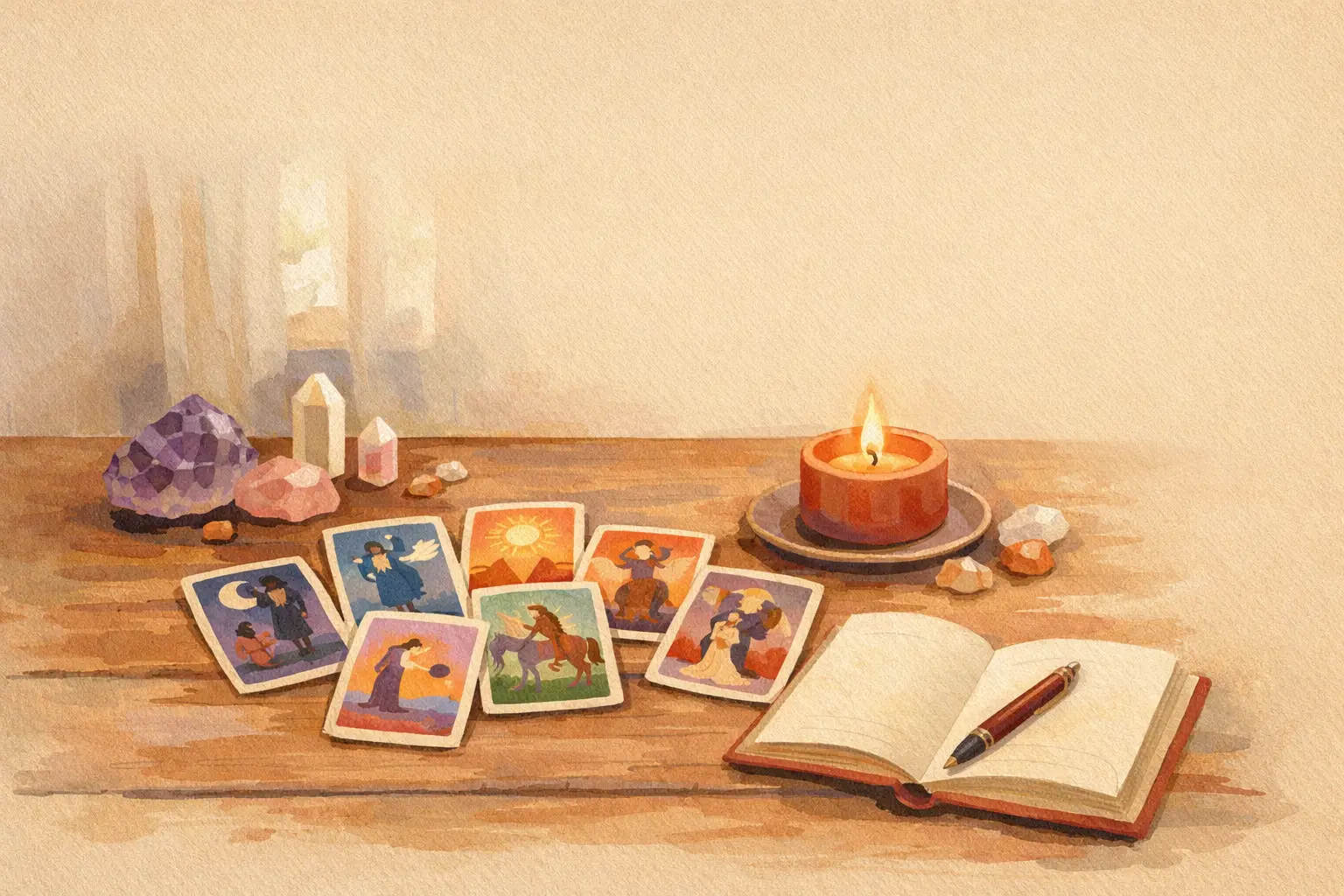
Understanding the Basics Before Reading Tarot
Before you learn how to read tarot, it’s helpful to understand what a tarot deck is. A traditional deck has 78 cards, divided into Major and Minor Arcana. The Major Arcana represent important life stages, while the Minor Arcana illustrate everyday situations.
Take time to get familiar with the visual aspect of each card. Observe the colors, symbols, and characters. This first approach will help you create a personal connection with your deck and feel its energies.
For example, look at The Fool card. It evokes beginnings, freedom, and the leap into the unknown. Compare it to Justice, which speaks of balance and clarity. This contrast helps you grasp the diversity of possible messages.
To help you, explore the meaning of the 78 cards. There you’ll find useful descriptions for each card, making your first interpretations easier. Try to memorize a few key points for each Major Arcana, then gradually move on to the Minor Arcana.
Choosing the Right Spread for Your Question
When you want to learn how to read tarot, choosing the right spread is essential. There are many spreads, each suited to a type of question or situation. The one-card spread is ideal for a simple answer or daily inspiration. You can try it with the card of the day.
For more complex questions, the three-card spread offers a reading in three parts: past, present, future. It sheds light on how a situation evolves. For example, if you’re wondering how a relationship will develop, this spread shows the path so far, where you are now, and what’s ahead.
If you’re looking for an in-depth analysis or have a very specific question, try the cross spread. This spread has several positions: pros, cons, answer, advice, and synthesis. It helps you explore different aspects of an issue.
Feel free to check out our page dedicated to tarot spreads to explore other methods and choose the one that fits your current question. Over time, you can also invent your own spreads to make the tool your own.
Preparing to Read Tarot: Setting and Focus
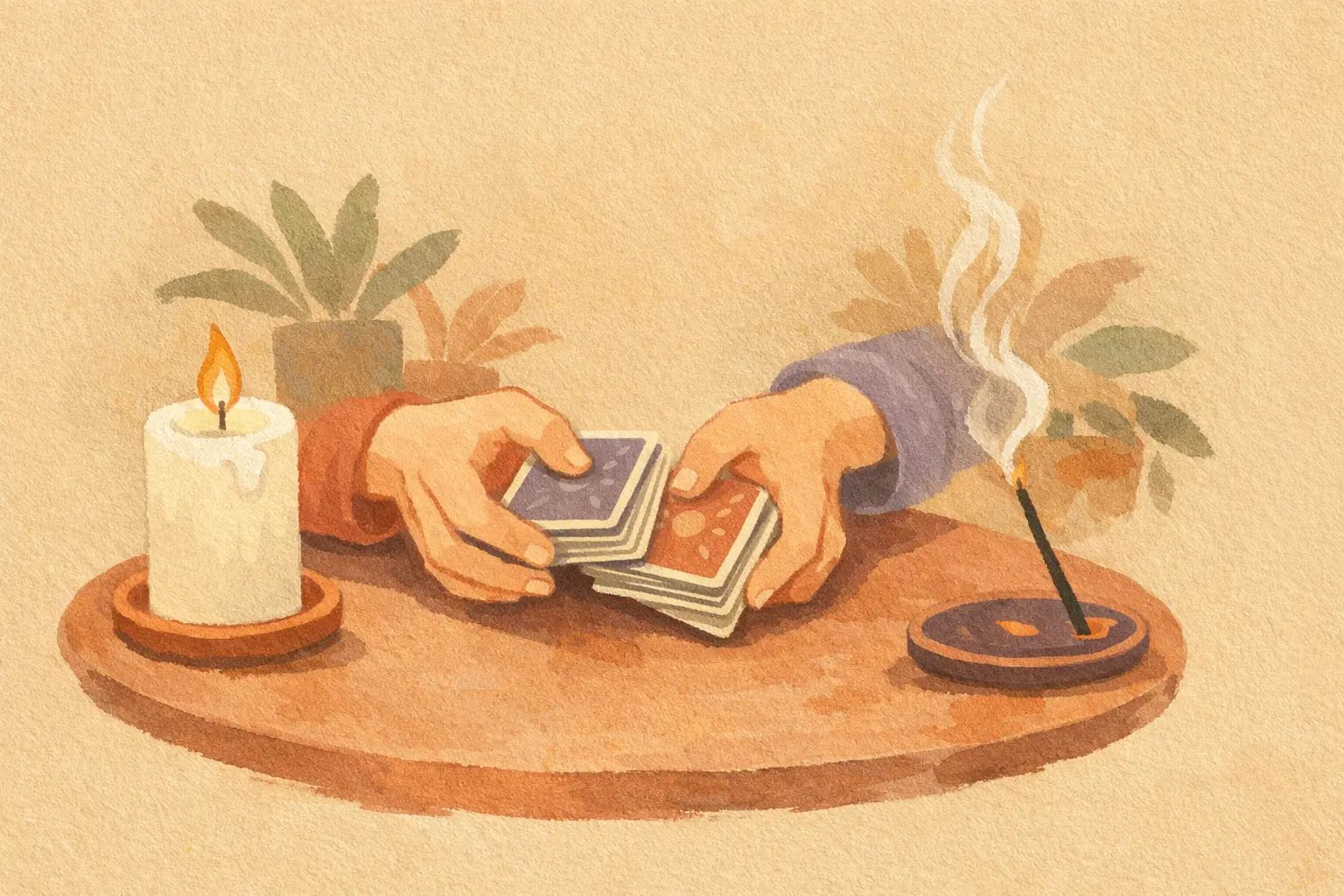
How you prepare for your reading influences your tarot experience. Settle in a calm place where you feel comfortable. Some people like to light a candle or use incense to mark the moment. This ritual helps you refocus and open your mind to intuition.
Before drawing the cards, take a few moments to clearly formulate your question. Say it in your mind or out loud. Then shuffle the cards slowly, focusing on your intention. This moment of centering is essential for a meaningful and personal reading.
If you feel scattered, don’t hesitate to take a few deep breaths before you start. The more present you are with yourself, the smoother the reading will be.
For example, if you’re going through a period of doubt, write your question in a notebook before the reading. Read it again just before shuffling the cards. This method helps you stay focused and not be influenced by distracting thoughts. This little ritual creates the right space to receive the tarot’s messages.
Interpreting Tarot Cards: A Matter of Intuition
Reading tarot isn’t just about applying fixed definitions. Each card can take on a particular meaning depending on the question, its position in the spread, and your feeling in the moment.
To start, consult the meaning of the 78 cards to get the basics. Then, observe the connection between the cards drawn. Sometimes, two cards side by side create a new nuance or story. The card combinations will help you refine your interpretations.
For example, if you draw The Moon followed by The Sun, you might see it as a transition from doubt to clarity. If you get The Tower with The Hierophant, you might imagine a profound transformation accompanied by wisdom. Imagine you ask, “How will my project evolve?” and you get The Wheel of Fortune, The Emperor, and Judgement. You could read this as a positive change, a need for organization, and an important decision.
Don’t hesitate to write down your impressions in a notebook after each reading. This will help you develop your intuition and remember your personal interpretations. Reread your notes after a few days: you might see new insights or confirmations.
Practical Tips for Reading Tarot Well
Be patient with yourself. Learning how to read tarot takes time and practice. Focus on regularity rather than quantity. For example, do a short daily reading each morning to get familiar with the cards.
Try different spreads to see which ones resonate most with you. For example, the yes/no spread is perfect if you’re hesitating over a simple decision. For love questions, the love spread can give you a new perspective.
If you want to explore other areas, like work or family, adapt the spread to the situation. Use the cross spread to clarify a professional decision, or the future spread to explore the possibilities ahead.
Remember, tarot is a tool for reflection. It doesn’t replace professional advice. If your question concerns your health, finances, or legal matters, consult a specialist.
Take time to review your past readings. With experience, you’ll discover new nuances and see your progress. Keep your readings in a notebook or on your phone to track your growth and refine your understanding.
highlight=true
h2
Deepening Your Tarot Practice Over Time
paragraphs
With practice, you’ll gain confidence. Try drawing a card each day, like the card of the day, to get familiar with the symbols and listen to your feelings.
Share your experiences with other enthusiasts. Exchanges enrich your understanding and let you discover new perspectives. You can also explore related fields, such as astrology or dream interpretation.
Always seek to evolve in your tarot reading. Let yourself be surprised by the cards’ messages and trust your intuition.
Enrich your practice by trying new tarot decks. Each deck has its own atmosphere and illustrations: find the one that inspires you most. For example, you can compare a classic tarot to a themed tarot to see which one resonates with you.
To progress, don’t hesitate to create your own spreads. Imagine a spread to explore your current desires or to receive a message from the tarot about the day ahead. The more you personalize your practice, the more comfortable you’ll feel.
Adapting Your Tarot Reading to Different Life Areas
Tarot can be adapted to any daily question: love, work, family, personal growth. For each area, there are specific spreads. The love spread sheds light on relationships and feelings. For example, if you’re wondering how to improve communication in your relationship, this spread can show you the energies to work on.
The future spread helps you consider possibilities without fixing anything in stone. For a career decision, use the cross spread to explore the pros and cons. For quick decisions, the yes or no spread offers a concise reading, useful when you’re hesitating between two directions.
Don’t hesitate to try different methods to find the one that resonates most with you. For example, create a simple three-card spread to understand a family dynamic or a personal issue. Every spread is an opportunity to get to know yourself better and reflect on your current situation.
Always take a moment to integrate the message of the cards before acting. Note what you feel, what it inspires in you, and what you could put into practice. Tarot then becomes a true ally to help you move forward, without ever imposing a single path.
Frequently asked questions
Do you need a special gift to read tarot?
No, anyone can learn to read tarot. Intuition develops with practice. Take time to get familiar with your cards and listen to your feelings.
Can you read tarot for yourself?
Yes, you can absolutely read tarot for yourself. Just be honest with yourself, stay open, and take some distance from the messages you receive.
How long does it take to learn to read tarot?
Everyone progresses at their own pace. There’s no set timeframe. The key is to practice regularly and note your experiences to improve.
How do you choose your first tarot deck?
Trust your intuition: choose a deck whose images speak to you and that you feel comfortable with. A personal connection with the deck is important for your practice.
What’s the difference between tarot and oracle cards?
Tarot follows a specific structure with 78 cards. An oracle deck is more free in its composition and themes. Both are complementary tools for reflection.
These interpretations are symbolic: they invite reflection and are neither a diagnosis nor medical or psychological advice.
Draw the cards for free
Ask your question and get your full reading right away, no account needed.